


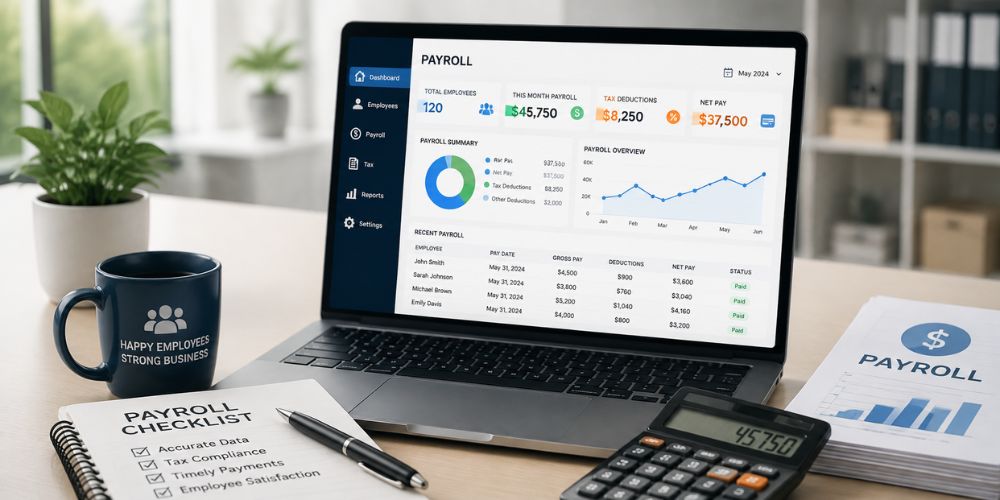
Managing payroll effectively requires accurate employee records, correct wage calculations, timely tax payments, and regular compliance checks. A proper payroll system ensures employees are paid correctly while the business meets federal, state, and local payroll requirements. Employers are responsible for calculating wages, withholding required taxes, paying employer taxes, and submitting payroll reports to the correct agencies.
Companies examining their HR operations may collaborate with Right HR Solutions to streamline procedures and decrease administrative burden.
Managing payroll effectively does not require unnecessary complexity. It requires a clear system where information is easy to track, responsibilities are understood and potential problems are identified early.
Keep Employee Records Reliable
Payroll begins with accurate employee information. If the details behind the calculations are incorrect, the final payment may also be affected.
Employee records rarely remain the same throughout the year. A team member may receive a salary adjustment, change working hours or update benefit selections. New employees may join while others may move into different positions.
These changes often involve several people. HR may receive the update first, while payroll needs to apply the change during the next payment cycle. Without proper communication, important details can easily be missed.
Regular record reviews help prevent these situations.
Important information may include:
- Salary details
- Working hours
- Leave records
- Benefit information
- Employee payment details
Accurate records also make payroll conversations easier. When an employee asks about a payment change, the payroll team can review the information quickly instead of searching through different files or systems.
Create A Consistent Payroll Routine
Payroll deadlines can become stressful when tasks are completed at the last moment. A manager may approve overtime late. A timesheet may contain missing hours. A department may forget to report an employee update.
Small delays can affect the entire payroll process.
A consistent routine gives everyone a clearer understanding of their responsibility. Employees know when information needs to be submitted. Managers know when approvals are required. Payroll staff know which checks need to happen before payments are finalised.
A typical payroll process may include:
- Reviewing working hour records
- Checking employee changes
- Confirming approved deductions
- Completing final payment checks
The purpose of a routine is not to create more paperwork. It is to reduce uncertainty before deadlines arrive.
Smaller companies may manage payroll successfully through simple methods. However, as the workforce grows, manual processes can become harder to maintain. More employees usually mean more records, more changes and more opportunities for mistakes.
Understand Payroll Requirements
Payroll involves more than calculating employee payments. Companies also need to manage deductions, reporting responsibilities and other requirements connected with employee compensation.
Many payroll issues happen because of small oversights. A record may not be updated. A procedure may not reflect a recent change. Important documentation may not be stored correctly.
Regular reviews help identify these issues before they become larger concerns.
A payroll review does not need to be complicated. It may involve checking employee records, reviewing calculations and confirming that required information is organised properly.
Written procedures are also valuable. If the person responsible for payroll leaves the role or another team member needs to assist, documented steps make the transition easier.
Professional support can also help organisations maintain reliable systems. Payroll Management Services can assist companies that need help managing payroll responsibilities while reducing the workload placed on internal teams.
Use Technology To Support Payroll
Payroll software has changed how many organisations manage employee payments. Digital systems can make record keeping easier, reduce repetitive tasks and provide quicker access to important information.
However, technology does not remove the need for accurate processes.
A payroll system depends on the information entered into it. Incorrect employee details or missing approvals can still create problems, even when advanced software is being used.
The right system should simplify everyday tasks. It may help organise:
- Employee records
- Payment history
- Payroll reports
- Important documents
Technology should support payroll management rather than replace proper planning. A complicated system without clear procedures can create additional confusion.
Employee access is also worth considering. When staff members can review relevant payment details or documents easily, fewer questions need to be handled manually by HR teams.
Review Payroll Before Problems Appear
Many payroll problems are discovered after an employee notices something unusual. A stronger process involves checking for possible issues before they affect employees.
Regular reviews can reveal repeated mistakes, delayed approvals or areas where information is regularly missing.
These checks become increasingly important as companies grow. A payroll process that works well for a small team may become difficult when the workforce includes different schedules, benefits and payment arrangements.
A growing organisation needs payroll processes that can adjust as requirements change.
Payroll reviews may include:
- Checking recent payment cycles
- Reviewing common employee questions
- Identifying repeated errors
- Improving unclear procedures
Small improvements made consistently can prevent larger problems later.
Conclusion
For companies learning how to manage payroll effectively, the focus should remain on accurate records or ganised processes and regular reviews. Payroll becomes easier to manage when each stage has clear ownership.
As organisations grow and employee needs change, professional assistance can help maintain accuracy and consistency. Companies looking for dedicated payroll support can explore Payroll Management Services to improve their payroll operations.