
A birth certificate is ready for use abroad. Then the foreign office asks for an apostille. The same thing can happen with a diploma, marriage certificate or power of attorney. For someone seeing the term for the first time, the request can sound more complicated than it is. Usually, the confusion starts because several document checks can happen before the paper is accepted overseas.
Information from Right HR Solutions can help with the preparation side, but the basic idea is straightforward. An apostille is an official certificate used to authenticate the origin of certain public documents for use in another country covered by the Hague Apostille Convention.
What an Apostille Actually Checks
An apostille does not approve the whole document. It checks specific details tied to where the document came from.
Under the Hague Convention, the certificate confirms the authenticity of the signature, the capacity in which the signer acted and the identity of the seal or stamp on the document. That might be the signature of a clerk on a certified record. In another case, it could be the signature and seal of a notary.
This detail matters because the receiving authority is not being asked to trust an unfamiliar signature on sight. The apostille gives that authority a standard way to recognise the official source behind it.
What It Does Not Verify
There is one limit that causes a lot of confusion. An apostille does not confirm that every statement written inside the document is true.
A signed affidavit, for example, may contain facts supplied by the signer. The apostille does not investigate those facts. A contract may also have an apostille attached without the issuing authority deciding whether the agreement is fair, enforceable or legally suitable for the people involved.
The certificate authenticates origin. It does not replace legal review. The Hague guidance makes the same distinction between authenticating the document’s origin and approving its underlying content.
Documents That Commonly Need One
Apostilles are commonly requested for public documents that need to be used overseas. Birth certificates, marriage certificates, court records, educational documents, powers of attorney and some business papers often fall into that group. Florida lists several categories of public records that can qualify for apostille processing.
Still, the preparation route changes with the document. A certified birth record is handled differently from a privately signed document. The guide on apostilling a birth certificate gives a good example of why the source of the record has to be checked before anything is submitted.
The destination also changes the answer. Apostilles are used for documents going to countries covered by the 1961 Hague Apostille Convention. A country outside that system may require an authentication certificate followed by another form of legalisation.
Who Issues Apostilles in Florida?
For eligible Florida documents, the Florida Secretary of State is the competent authority that issues apostille certifications. The Division of Corporations handles those requests.
That does not mean every paper sitting on a desk in Florida belongs in the Florida process. A document issued by another state normally follows the authentication route for that state. Federal documents can have a different route again.
Checking the origin first saves a surprisingly common mistake. The article on getting a document apostille also explains why the document type should be identified before the application is prepared.
Apostille and Notarisation Are Different
Notarisation and apostille certification are often mentioned together, which makes them easy to mix up. They are separate acts.
A notary performs the notarial act required for a particular document. Depending on the certificate involved, that may include checking identity, taking an acknowledgment or administering an oath. Florida law treats acknowledgments and oaths as distinct notarial acts.
An apostille may come later if that notarised document needs international authentication for a Hague Convention country. In that situation, the apostille can authenticate the notary’s signature and official capacity.
Document Notary Services may therefore be relevant before an apostille for some private documents. A certified government record, however, should not automatically be notarised simply because it is going overseas.
What the Certificate Looks Like
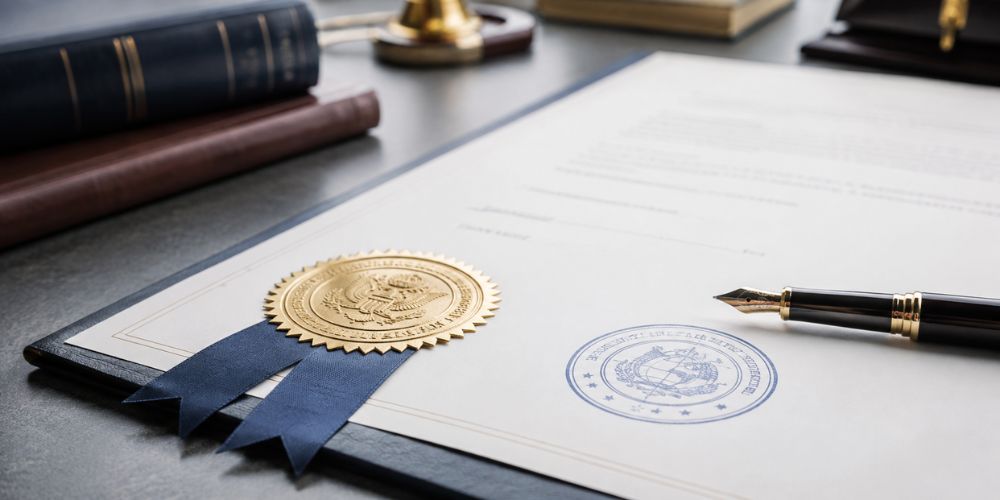
The apostille itself follows a recognisable model. The Hague certificate contains ten numbered fields. They cover details such as the country of origin, signer, signer’s capacity, issuing authority, date, certificate number and official seal or stamp.
It may be placed directly on the public document or attached as a separate sheet. That attachment is not spare paperwork. It forms part of the authenticated set.
Removing staples, separating pages or altering the issued arrangement can create trouble later. A receiving office needs to see the connection between the apostille and the document it authenticates.
Why Apostille Requests Get Delayed
Delays often start with something ordinary. A photocopy is sent when a certified copy was required. A notarial certificate is incomplete. A name differs between two records. The document goes to the wrong authority. Florida’s own submission guidance distinguishes between originals, certified copies and other qualifying documents.
Another common surprise comes after the apostille has been issued. The overseas authority may still ask for a translation, a newer certified copy or another supporting record. A valid apostille does not cancel those local filing rules.
That is why the receiving institution’s instructions deserve attention before the document is prepared. A few minutes spent checking the exact version, destination country and issuing authority can prevent the paperwork from coming back.
Conclusion
An apostille seal is best understood as proof of a document’s official origin, not proof that everything written inside it has been approved. It authenticates the relevant signature, official capacity and seal or stamp for use under the Hague system.
For qualifying Florida records, Florida Apostille Services can help with the submission process once the document type, issuing authority and destination requirements have been checked.